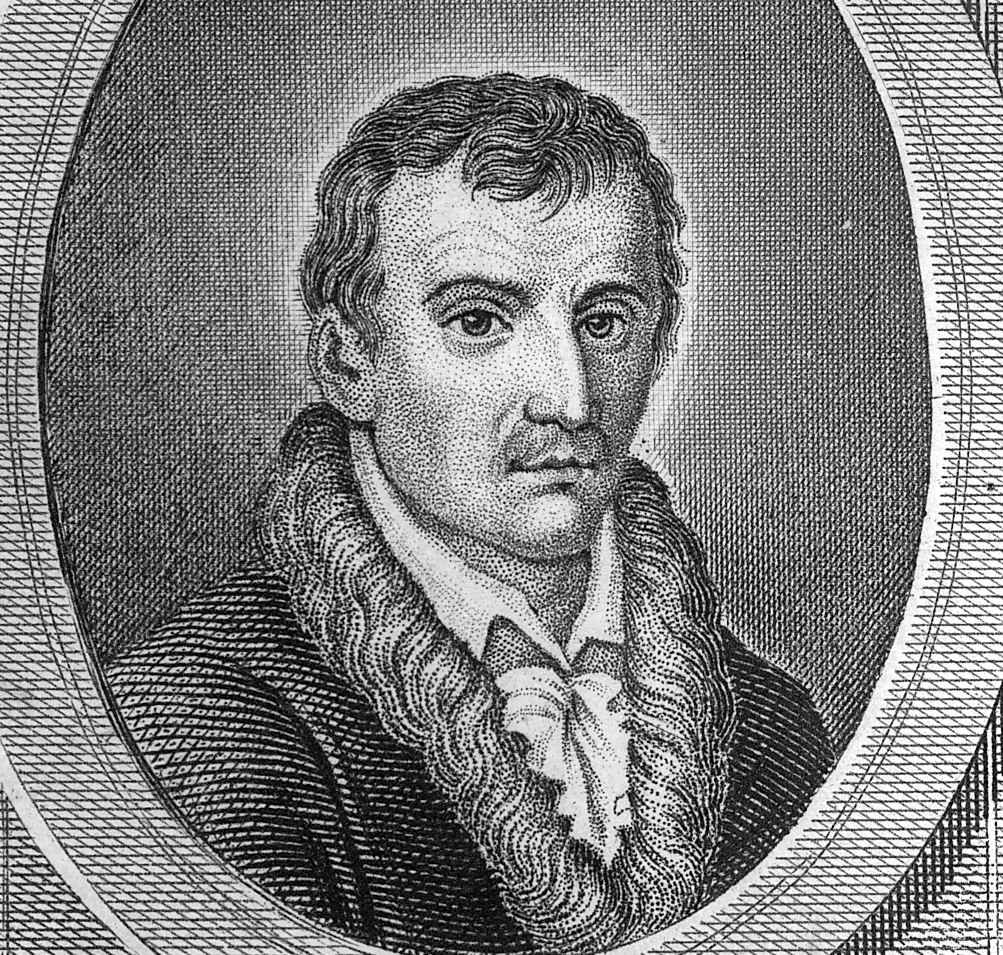
Prague
"I stood before the graves of the emperors Wenceslas and Charles IV, and reflected that the days of the Golden Bull were golden, perhaps, only for a few princes, but for the rest of mankind heavy as lead."
"I stood before the graves of the emperors Wenceslas and Charles IV, and reflected that the days of the Golden Bull were golden, perhaps, only for a few princes, but for the rest of mankind heavy as lead."
The theatre here is correctly laid out and built with some taste. The play performed was bad, the company acted poorly, and the ballet was scarcely better than the play.(1)
The subject of the latter, The Wild Girl, had been handled very well by its composer; it was a pity that the performance preserved neither character nor rhythm.(2)
Guardasoni manages both divisions of the theatre, German and Italian. I found the German company extremely mediocre, and the Italian is said to be several degrees worse—although in Leipzig we once found his company very well cast and well ordered.(3)
Today Hamlet was given, and you can imagine I had no wish to see one of my favourites so ill-used.(4)
The library was closed, having recently been in danger of fire, and repairs are under way—repairs that will take longer than I intend to wait. Councillor Unger, the librarian, a man of great service to scholarship and enlightenment and very obliging to strangers, would undoubtedly have been kind enough to show us these scholarly treasures, had we found him at home.(5)
It is well known how severely the library was plundered during the Thirty Years’ War by the Swedes, who, through collusion with their partisans, even discovered the underground vaults where the hidden riches had been stored.(6)
By the dissolution of the monasteries under Joseph II the library had indeed gained enormously; yet by that very accumulation the books and manuscripts have been placed in greater peril, since they all lie together in one spot. The recent incident has confirmed and increased this anxiety.(7)
It was a fortunate thing that more than forty people were reading upstairs when, through the negligence of an artist working above with fire, the heat broke through. Thus the liberal use of the institution—whose organisation is among the most exemplary—proved to be its own salvation.(8)
Up at Hradčany the weather was bleak and dark, and through flurries of snow I looked towards the field where Frederick fought and Schwerin fell.(9)
The cathedral has much to interest the lover of history. The tombs of the old Dukes of Bohemia offer, to one who has leisure, a peculiar kind of pleasure; and the silver monument of an archbishop is perhaps not without interest even for the artist.(10)
While Schnorr was examining it, I stood before the graves of the emperors Wenceslas and Charles IV, and reflected that the days of the Golden Bull were golden, perhaps, only for a few princes, but for the rest of mankind heavy as lead.(11)
The monument of Count Schlick, the minister, just behind the Emperor’s stone, is a piece of corrupt Gothic bombast, devoid of taste or dignity. A pyramid in the church strikes me as if someone had tried to put the Blocksberg under a nightcap.(12)
Good Saint Nepomuk on the bridge, with his venerable company, still brings much comfort to pious souls. In Prague there seems, on the whole, to be a great number of zealots—among both Catholics and Protestants; only not among the higher classes, who in this respect are tolerance itself.(13)
I rejoiced when, beyond Lowositz(14) in Bohemia, I came upon the plains, and now hoped to find a considerable degree of prosperity and culture, since the soil all around seemed extraordinarily fertile.
But my expectation was sadly disappointed. The villages were sparse and poor—even more so than in the mountains. Threshing was under way on many floors in the manor yards, while the peasant houses were empty and dilapidated; the inhabitants crept about so downtrodden that they seemed still to bear slavery’s harshest yoke.
It seems to me they have benefited little from Joseph’s benevolent intentions,(15) and it is most likely that here they are pressed by corvée labour(16) more heavily than anywhere else. Where slavery is systematic, the towns often form the appendage of the great and lesser nobility and share in the plunder. That seemed to be the case here.
All were afraid as the French approached;(17) only the peasants shouted with joy and said they would welcome them gladly and would then make their oppressors pay.
Whether the countryman was right about the French is another question; but his joy during the fatherland’s terrible crisis carried a profound meaning that deserved to be taken to heart, and perhaps hastened peace more than the lost battles did.
Our well-meaning friends here frighten us by warning that robbers and murderers are roaming the surrounding country. Our friends might well spare us that; for we must go on.
In Leutmeritz(18) more than a hundred are said to be locked up, and in Prague not many fewer.(19) The disbanding of military corps is always attended by such evils, given the way our institutions are commonly organised.
I march forward boldly and put some trust in a good, heavy knotted cudgel,(20) with which I can strike hard and then jab a few inches into a man’s ribs.
Friend Schnorr(21) will do his part as well; and so anyone wishing to attack us would need three well-armed, resolute fellows. We do not look as if we carry much with us, nor as if we would readily surrender the little we do carry.
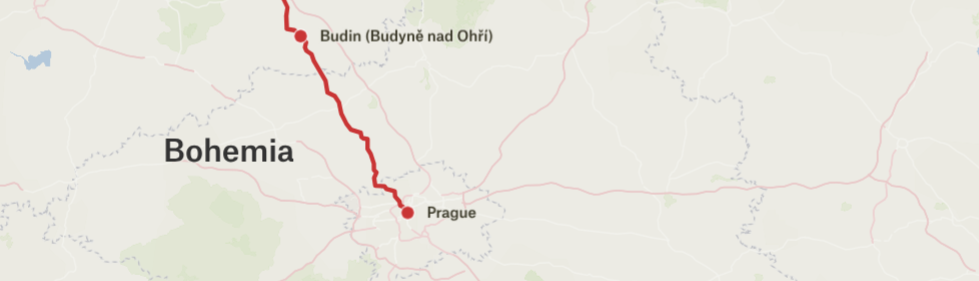
Budyně nad Ohří to Prague.